MCP (Model Context Protocol) and UCP (Universal Connector Protocol) are open standards that let AI models access your data in a structured way, with no scraping or custom integration. MCP, published by Anthropic in late 2024, exposes your content, APIs and databases as resources an assistant can query. UCP extends this logic to an entire ecosystem of interoperable connectors. For SEO, the shift is concrete: visibility no longer depends only on crawling and indexing, but on your ability to make your data legible and actionable for agents. A well-ranked site that exposes no structured resource becomes invisible to an assistant reasoning through MCP. Technical SEO absorbs a new layer: not just "being findable," but "being pluggable." This guide explains what these protocols are, what they change in practice, and how to prepare your site without waiting.
MCP and UCP, defined without jargon
MCP and UCP are standards that describe how an AI plugs into external data. The end of hacked-together scraping and proprietary integrations: a common grammar, readable by any compatible model.
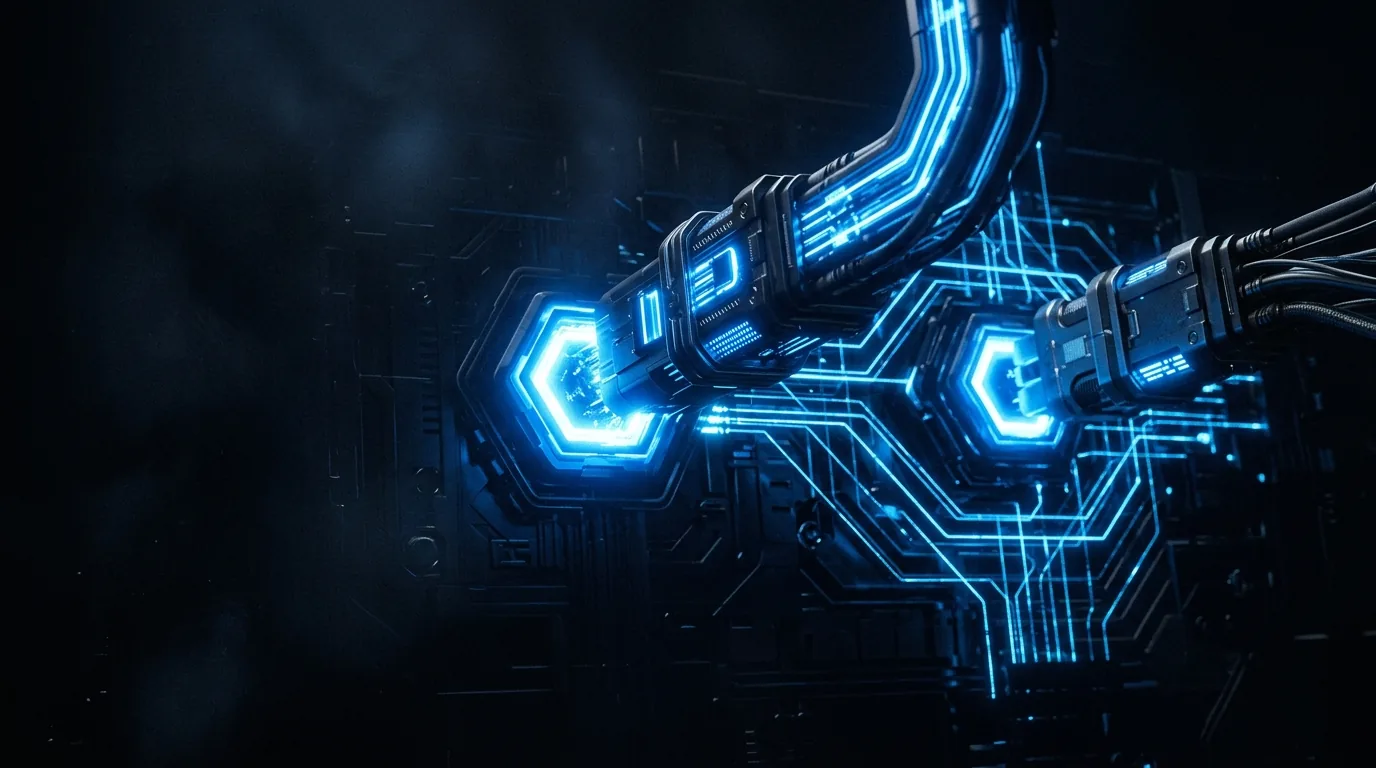
MCP was published by Anthropic in late 2024 as an open standard, then adopted across much of the ecosystem in 2025. It defines three primitives: resources (your content, documents, database rows), tools (functions the model can call) and prompts (reusable instruction templates). An MCP server exposes these primitives; an MCP client, embedded in an assistant, consumes them. The most common analogy is a USB-C port: a universal connector between the model and the outside world, where before each device needed a proprietary cable.
UCP takes the logic a step further. Where MCP links a model to a source, UCP targets the interoperability of an entire network of reusable connectors across multiple systems, agents and providers. MCP is the brick. UCP is the frame that assembles the bricks without rewiring each time.
MCP standardizes the connection between a model and a data source. UCP standardizes the ecosystem of connectors between systems. One does not replace the other: they stack. For a content publisher, the stake is identical in both cases: expose clean, typed, accessible data.
For a marketing lead or an SEO, hold on to the essentials: a machine-to-machine connection protocol is settling between your data and AI. And this protocol does not read the web like Googlebot. It queries declared resources.
How these protocols connect AI to data
The mechanism is direct: instead of guessing a page's content by reading its HTML, the model requests a precise resource from a server that returns it already structured. No approximate parsing, no ad noise to filter, no JavaScript to execute.
In practice, the flow looks like this. A user asks an assistant a question. The assistant, via its MCP client, checks the list of resources and tools available on the servers it's connected to. It selects the relevant resource (your product catalog, your pricing documentation, your case studies), retrieves it in structured form, then reasons over it to formulate an answer. The data arrives clean, typed, up to date.
This is a break from the crawl model. Let's recall a technical point many teams underestimate: LLMs do not execute JavaScript. A client-rendered page stays largely invisible to an AI crawler, which makes SSR or static HTML indispensable. MCP sidesteps this problem by design: there is no page to render, there is a resource to serve.
The three primitives that matter to you
- Resources: your content exposed as queryable objects (FAQs, sheets, numerical data).
- Tools: actions the agent can trigger (check availability, start a quote, query a price).
- Prompts: pre-wired instructions that guide how your resources are used.
This mechanism is exactly what underpins Answer Engine Optimization: making an answer directly consumable by a machine rather than a human eye. MCP is its protocol-level version. The same logic governs how to prepare a site for AI agents: you no longer decorate a page, you serve data.
What it changes for technical SEO
Technical SEO gains a layer. Yesterday, the goal was to be crawlable and indexable. Tomorrow, you must also be pluggable: exposing data an agent can consume without friction.
This does not mean crawling disappears. Web search and AI Overviews remain dominant: more than 50% of Google queries now trigger an AI Overview, and that channel relies on classic indexing. But a second door opens, and it obeys different rules. Here are the jobs that shift.
Schema.org stops being a bonus. A page that exposes clean FAQPage markup becomes a near-ready MCP resource. FAQPage also remains a strong signal for AI Overviews.
Since LLMs do not execute JavaScript, server-side rendering (SSR) or static already determines your citability. MCP raises the bar: your data must live somewhere other than a JS bundle.
The optimal citable passage sits around 150 words. This self-contained format works equally well for an AI Overview answer and a resource served via MCP.
Exposing an MCP server or a clean API becomes an SEO deliverable. The SEO technician now works hand in hand with the data team.
The consequence is clear: the scope of technical SEO expands toward data architecture. A perfectly ranked site that keeps its information locked inside unrendered JavaScript components leaves agents at the door. This shift sits at the heart of answer engine optimization, where machine legibility outweighs page aesthetics.
Off-site brand mentions (YouTube, Reddit, Wikipedia) correlate more strongly with AI citations than Domain Rating. The Ahrefs analysis over 75,000 brands (Dec. 2025) places the correlation of mentions well above that of DR (0.218).
MCP vs traditional crawling
The difference fits in one sentence: crawling discovers and interprets, MCP requests and receives. The first is an indirect reading of the public web; the second, direct access to declared resources.
| Criterion | Traditional crawl | MCP / UCP |
|---|---|---|
| Access mode | Discovery via link exploration | Direct request on a declared resource |
| Data format | HTML to parse and clean | Structured, typed, ready to use |
| JavaScript execution | Often ignored by LLMs | Irrelevant: no page to render |
| Freshness | Depends on crawl frequency | Real-time on every call |
| Publisher control | Indirect (robots, sitemap) | Direct (you decide what's exposed) |
Neither suffices alone. Crawling retains a massive reach: 38% of AI Overview citations come from the organic top 10, including 47% from positions 5 to 10. Without organic presence, no citation. But the overlap between the two worlds stays small: only 11% of domains are cited by both ChatGPT and AI Overviews. This fragmentation is precisely the argument for opening a second access channel to your data.
MCP won't win you positions in Google. It makes you usable by agents that bypass the SERP entirely. At the scale of ChatGPT and its 900 million weekly users, this channel is anything but anecdotal.
UCP's role in the agentic web
UCP is the link that turns a collection of isolated MCP servers into a true agentic web, where agents transact with each other through shared connectors. It's the higher rung of interoperability.
The typical scenario: a purchasing agent queries a merchant's catalog, checks availability, triggers a quote, then confirms an order, all without a human touching a browser. For this to work at scale, you need a common layer describing how these connectors discover each other, authenticate and exchange. That's UCP's promise, complementary to the agent-to-agent protocols emerging in parallel.
For a brand, the stake goes beyond ranking: it's about existing in automated transactions. We detailed these mechanisms in our analyses of the agentic web from the brand side and agentic commerce, where the absence of a connector amounts to closing your shop to machine buyers.
Well-structured data serves crawling and AI Overviews first, then MCP, finally UCP. The same job feeds all three layers. Our GEO France Guide details the priority actions to lay these foundations market by market.
How to prepare your site
Start with what you already control: structure your data and serve it in static HTML. Most of the MCP benefit is earned upstream, before deploying any server.
Verify that your critical content (prices, FAQs, sheets) is present in raw HTML, not injected by JavaScript. This is the prerequisite for any AI visibility.
Deploy FAQPage, Article, Organization across the entire site. These tags are the raw material of your future MCP resources.
Rewrite your key answers as self-contained blocks of around 150 words, usable without context. This work serves crawling today and MCP tomorrow.
List the data an agent would want to query on your site: catalog, prices, availability, case studies. That's the spec for a future MCP server.
AI citations follow your mentions on Reddit, YouTube and Wikipedia more than your Domain Rating. This lever holds regardless of the protocol.
Only deploy an MCP server once these foundations are laid. Plugging an agent into poorly structured data only amplifies the disorder. The order of priorities stays the same as in SEO: data cleanliness first, exposure second.
Mistakes to avoid right now
The costliest mistake is treating MCP as an isolated IT project, disconnected from your content strategy. It's the opposite: MCP is the culmination of editorial and structural work, not its starting point.
Three traps recur systematically. First: deploying an MCP server on data locked inside unrendered JavaScript, which stays invisible to both crawling and most clients. Second: exposing everything, with no hierarchy or curation, which drowns the agent in worthless resources. Third: neglecting off-site mentions, believing a technical protocol compensates for a lack of reputation, when AI citations follow a brand's distributed reputation first.
The rule is simple: a protocol does not invent an authority you don't have. It makes usable an authority you've already built. Lay down clean data and reputation first, plug in second.
Free GEO audit: we measure your citability, your HTML rendering and your MCP maturity. You leave with a clear, prioritized and costed roadmap.
Questions fréquentes
Does MCP replace classic SEO?+
No. MCP adds to classic SEO without replacing it. Crawling and indexing remain essential for web search and AI Overviews, which now trigger on more than half of Google queries. MCP opens a second channel: direct, structured access to your data by agents. The two coexist and reinforce each other.
What exactly is the Model Context Protocol?+
MCP is an open standard published by Anthropic in late 2024 that defines how an AI model connects to external sources (files, APIs, databases) via servers. It exposes resources, tools and prompts in a normalized way, with no custom integration per model. The common analogy is a USB-C port between the AI and your data.
Do you need an MCP server to be cited by ChatGPT?+
Not today. The majority of AI citations still come through web crawling and static HTML content. An MCP server becomes relevant for agentic use cases (internal assistants, product integrations, transactional agents) and anticipates a shift where agents query data sources directly rather than the SERP.
What's the difference between MCP and UCP?+
MCP standardizes the connection between a model and a data source. UCP (Universal Connector Protocol) targets interoperability at a larger scale: a network of reusable connectors across multiple systems, agents and providers. MCP is the building block, UCP the framework that holds them together without rewiring each integration.
Where do I start if I have no technical data skills?+
Start with HTML rendering and structured data. Make sure your critical content (prices, FAQs, product sheets) exists in raw HTML, not only in JavaScript. Deploy schema.org FAQPage and Article. Both jobs serve crawling today and form the raw material for your future MCP resources, without needing any server yet.