
Restaurants & Hospitality — AI Visibility, Agents & Automation
When a diner asks ChatGPT or Google 'where should I eat tonight,' your venue shows up — or it doesn't. We work the three levers that fill the room: AI visibility, a booking agent, and service automation.
Optimized to be cited in
What follows is written and checked by people.
Diagnosis, content, technical work, reporting: the same small team follows every step, from the first audit to the monthly report. No anonymous subcontracting, no unreviewed generated content.
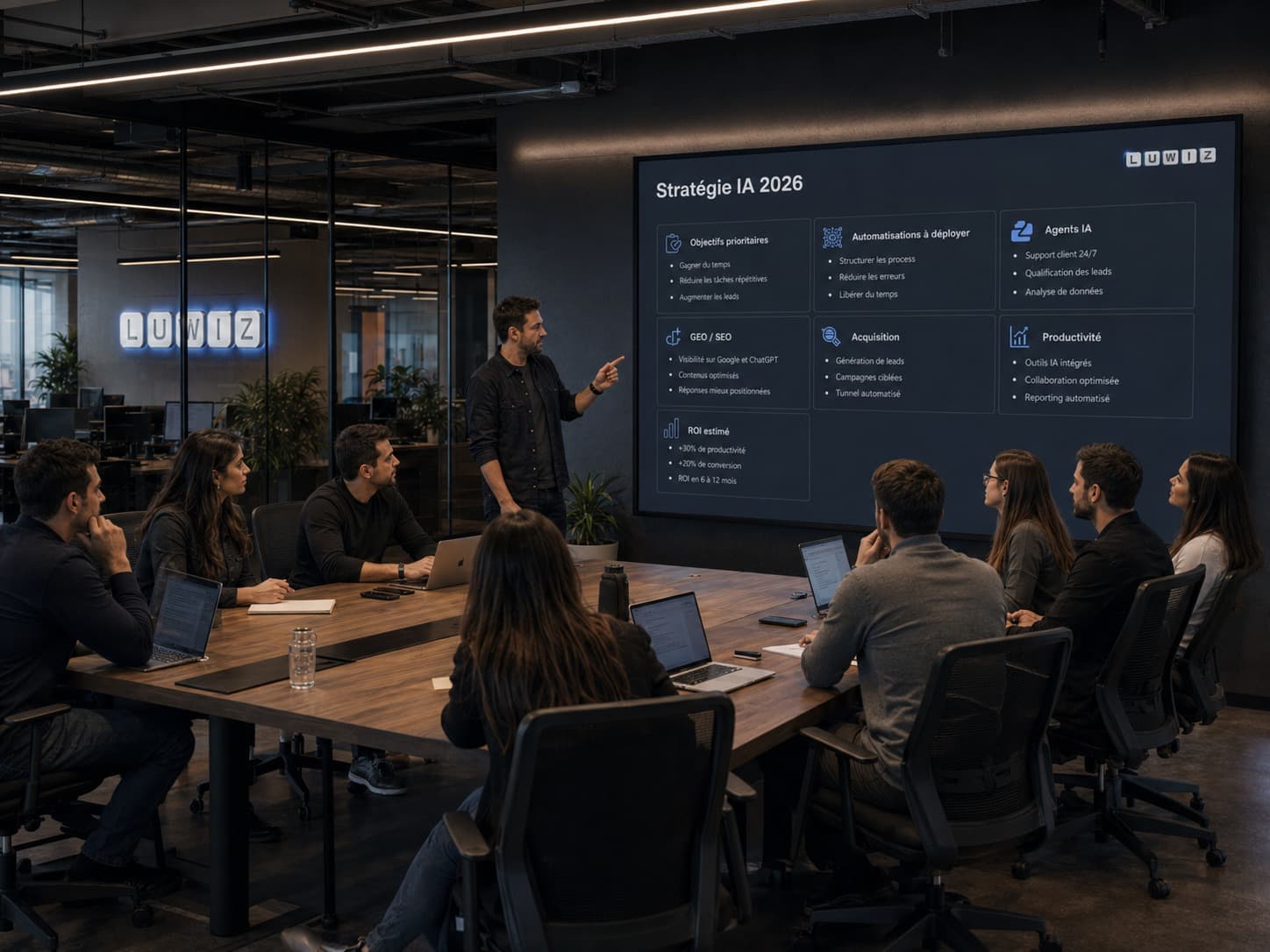
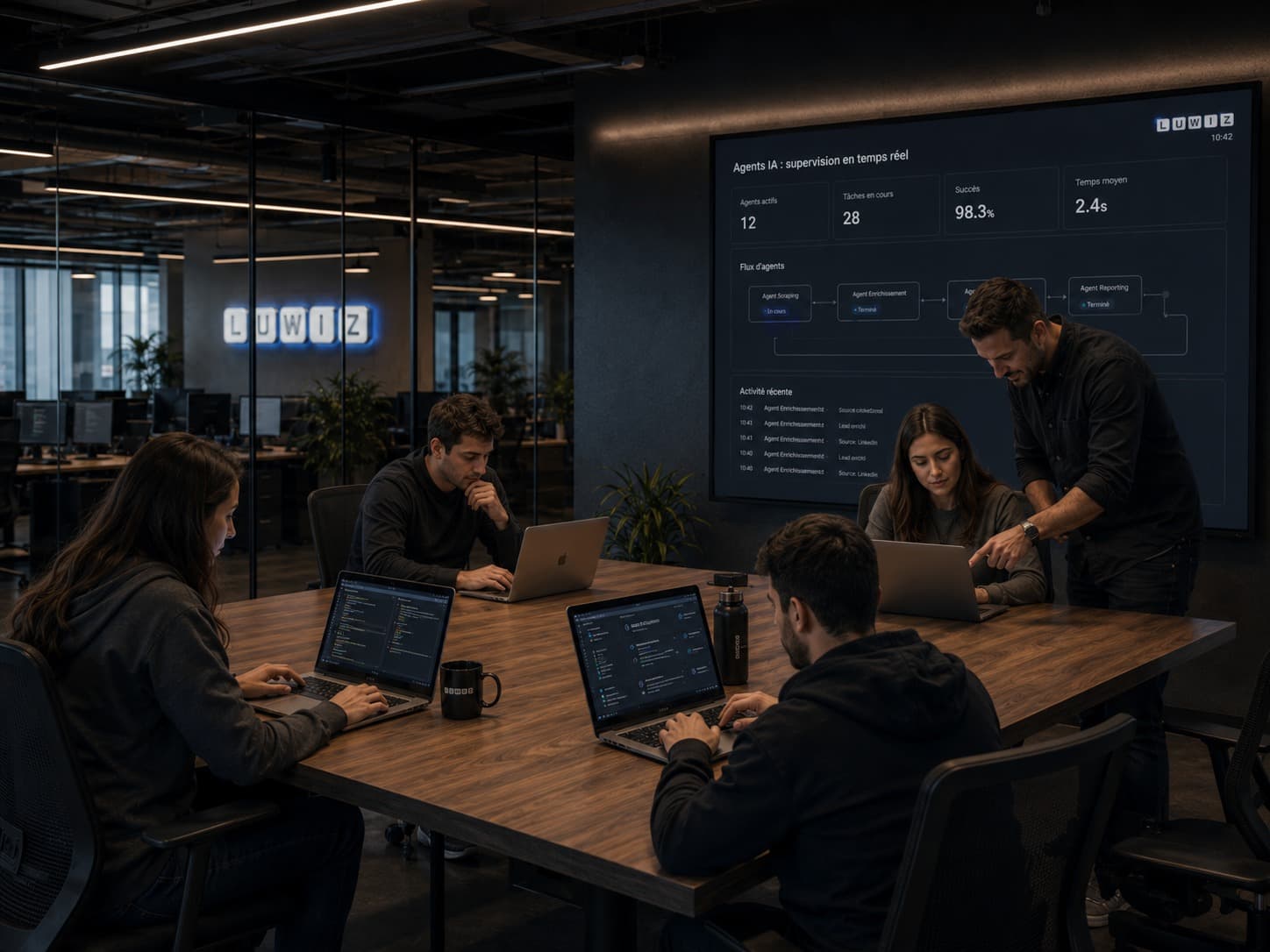

A diner searching for a restaurant in 2026 no longer flips through a directory: they ask ChatGPT "where should I eat tonight near me," they compare on Google, they book on WhatsApp. At every step, your venue is present — or invisible. We work the three levers that actually fill the room: getting recommended by AI and Google, deploying an agent that takes bookings, and automating what steals your time (reviews, reminders, no-shows).
Restaurant search has shifted battleground
For twenty years, a restaurant's visibility played out on three platforms: Google, TripAdvisor, and word of mouth. That's no longer true. A growing share of diners now asks a generative AI — "best seafood restaurant in La Rochelle," "where to eat vegetarian in Lyon," "nice spot for a birthday in Bordeaux" — and gets an answer naming three or four venues. If you're not on that shortlist, the diner will never see you. They won't even know you exist.
This shift opens a window. Almost no restaurant has optimized for these generative answers: menus locked in machine-unreadable PDFs, signature dishes never described in text, Google profiles left to rot. The first venue in an area to structure its content properly becomes the AI's default answer — a lead that's hard to dislodge. That's why restaurant marketing can no longer be thought through without an AI-visibility strategy wired into classic SEO.
of French people already use a generative AI to search (Arcep/Arcom 2025)
AI visibility · booking agent · automation — the three that fill the room
an agent that takes bookings at night, on your closing day and during the rush
The 3 Luwiz pillars applied to your venue
Get recommended by AI
Menu and signature dishes made machine-readable, Restaurant schema, recent reviews, a spotless Google profile. Goal: be cited when someone asks "best [type] restaurant in [city]."
24/7 booking agent
Website widget + WhatsApp (voice option) that answers, checks availability and takes the booking. It qualifies group and event requests, and routes to you when a call is needed.
Post-meal review request
Automatic message after service with a direct link to your Google profile. A flow of recent reviews that boosts both your reputation and your AI citability.
Anti no-show
Instant confirmation, reminder the day before and a few hours prior, one-click rescheduling. Fewer empty tables, without harassing anyone.
Booking management
Availability check, confirmation, reminder, review request: the full booking cycle automated end to end, connected to your floor tool.
Content that makes you hungry
Citable dish descriptions, service and plating videos, the chef's story. The content Google and AI favor to recommend you.
Pillar 1 — Be the answer when people ask "where to eat"
The restaurant query has a very recognizable shape: "best [cuisine] restaurant in [city]," "where to eat [specialty]," "[vibe] restaurant for [occasion]." These questions are asked thousands of times a day, to Google and to ChatGPT alike. Answering them requires your content to be citable: a menu in real text (not a PDF or an image), dishes described in one clear sentence, an up-to-date Google Business Profile with categories, photos and recent reviews, and Restaurant schema that engines read without ambiguity.
Concretely, a citable passage looks like this: "The restaurant serves market cuisine in [city], with a signature [dish]; booking recommended at weekends." Self-contained, factual, extractable as-is by an AI. That writing discipline — the same one described in our GEO approach — separates a site merely published from a site actually recommended. The SEO foundation (local profile, speed, mobile, "restaurant + city" queries) remains the bedrock: the same authority signals feed Google and AI.
Restaurants are one of the most-queried sectors in AI — "where to eat well," "best spot for a birthday" — and one of the least optimized. A PDF menu, a ghost Google profile, zero text descriptions: that's the norm. The first restaurant in an area to fix this becomes the default recommendation.
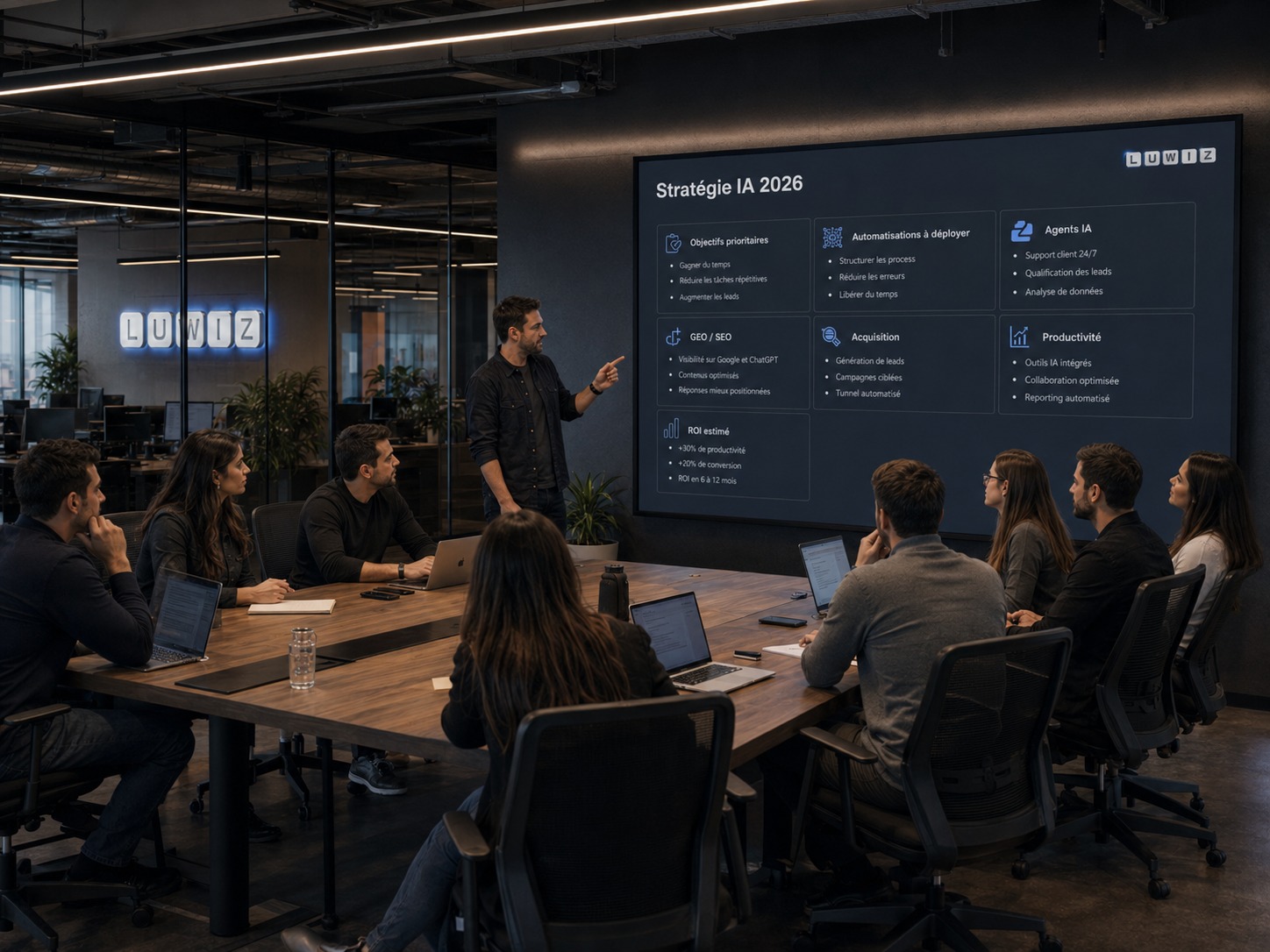
Pillar 2 — An agent that takes bookings, even when you're in the kitchen
The phone rings during the rush, no one picks up, the diner books elsewhere. The WhatsApp message lands at 11pm, they wait for tomorrow, they forget. A group request for a birthday of 15 comes in on your closing Monday, with no reply. Each of these moments is a lost booking — and restaurants lose them every single day.
The AI agent captures these requests. Deployed as a widget on your site and on WhatsApp (with a voice option), it answers 24/7, checks availability, takes the standard booking and sends it to your floor tool. Above all, it knows how to qualify complex requests: a group (how many covers, date, allergies, budget), a private hire, an event — and route to you when a human must confirm. It doesn't replace your welcome: it catches what would otherwise fall into the void. The full mechanics are described on our AI Agents page.
Availability check, slot selection, number of covers, instant confirmation — without a team member picking up.
Qualification (covers, date, budget, allergies) then handoff to a human to close. No group request left unanswered.
Birthdays, company dinners, weddings: the agent collects the need and triggers your sales process instead of letting the lead go cold.
Where your diners already message. The agent replies in the channel they use, not a form they abandon.
Pillar 3 — Automate what steals your time and your covers
A restaurant runs on tight margins and a team with no spare minute. Three automations concretely change the equation, and these are the ones we deploy first in the sector.
First, the post-meal review request: a few hours after service, a personalized message goes out with a direct link to your Google profile, and a gentle follow-up if nothing is left. Recent reviews are the first signal Google and AI look at to recommend you — collecting them passively no longer cuts it. Next, end-to-end booking management: availability check, confirmation, reminder and review request, all chained automatically. Finally, anti no-show: instant confirmation, reminder the day before and a few hours prior, one-click rescheduling — the mechanism that empties the fewest tables. These blocks are detailed in our AI automation offer.
a steady flow of recent reviews, the #1 signal to be recommended by Google and AI
fewer empty tables thanks to automatic reminders the day before and a few hours prior
booking, reminder and review request chained with no manual input
We did it on our own product first
Most agencies discover the restaurant world when they sign their first restaurant client. Not us. Cyril, co-founder of Luwiz, founded Onrush.fr, a management software for restaurants. We built, sold and ran a product in this sector: we know the rhythm of service, the reality of margins, the weight of no-shows, the legitimate obsession with reviews, and how hard it is to find five minutes to "do marketing."
That domain mastery changes how we approach an engagement. We applied our own AI-visibility method to Onrush before offering it to anyone — we structured our content to be found, worked on our citability, tested the automation mechanics on a real product in the sector. When we talk about a citable menu, a booking agent or a review request, we're not reciting a brochure: we're describing things we've tested from the inside.
Onrush is our proof of sector mastery, not a performance number. We'll never sell you a "+X% covers" we can't source. What we put on the table: real knowledge of your trade, a method proven on our own product, and total transparency on what works — and what doesn't.

Restaurant, hotel, caterer: three realities, one method
An independent restaurant needs to exist on "restaurant [type] in [city]," to fill the room midweek, and an agent that captures bookings outside service hours. A hotel with a restaurant stacks the stakes: visibility on "boutique hotel with restaurant in [city]," an agent that handles table and room and event, stay-specific automations (post-stay review request, restaurant upsell). A caterer or event service plays on quote queries and a longer cycle, where the agent qualifies the request (number of guests, date, budget) and triggers the sales process.
We never apply a single model. We start from your configuration — number of covers, share of groups, seasonality, existing booking channels — to prioritize the three pillars in the right order. A neighborhood bistro and a fine-dining hotel-restaurant don't have the same urgencies, and the offer adapts to that.
Generic approach or the Luwiz method: the difference
Most providers sell the restaurateur a brochure site and stop there. A pretty menu as an image, an embedded Google map, and "there, you're online." This approach ignores the sector's real mechanics in 2026: search migrating to AI, bookings lost for lack of a reply, and the time no-shows and the review chase devour every week.
| Criterion | Generic approach | Luwiz method |
|---|---|---|
| Menu | PDF or image, machine-unreadable | Structured text, citable by Google and AI |
| Bookings | Form or phone only | 24/7 agent on site + WhatsApp, qualified groups |
| Reviews & no-show | By hand, when you remember | Automated requests and reminders, steady flow |
| AI visibility | Absent | Citability built in from the design stage |
Where to start: the first restaurant levers
Get the menu out of the PDF or image, publish it as structured, marked-up text. The basis for being read by Google and AI.
Categories, recent photos, hours, booking link, review replies. The most profitable local lever, often neglected.
Widget + WhatsApp to capture requests outside service hours, including groups and events.
Post-meal review request and anti no-show reminders: the two mechanisms that pay off from month one.
The KPIs to track in restaurants
You don't steer a restaurant by Google positions, but by covers and reputation. The reference metrics: the number of bookings captured by the agent (especially outside service and on groups), the no-show rate before/after reminders go live, the volume and freshness of Google reviews collected, and the share of your venue's citations in AI answers for queries in your area. These KPIs tie visibility directly to a concrete result: full tables and a reputation that works for you.
by the agent, outside service and on groups — the reference business KPI
measured before / after automatic reminders
how often your restaurant is recommended in generative answers
Common mistakes in restaurant marketing
The most widespread mistake is locking your menu in a PDF or image: neither Google nor AI can read it, so you show up on no dish-related query. Next comes the Google profile left to rot — stale photos, wrong hours, unanswered reviews — when it's the first place a diner and an AI look. Third trap: doing everything by hand. Answering bookings when you have time, chasing reviews "when you remember," absorbing no-shows with no reminder: that's time and covers lost in silence. Fixing these three points often unlocks more results than years of improvised communication.
Publish it as structured text, or you're invisible on dish queries.
Photos, hours, review replies: the #1 local signal for Google and AI.
A 24/7 agent captures what the phone misses during service.
Take review requests and anti no-show off the team's mental load.
Our approach: the Luwiz Method applied to restaurants
No improvised actions month after month. Every engagement follows the four steps of the Luwiz Method: Diagnosis (audit of your Google + AI visibility, your profile and your booking channels), Foundation (citable menu, Google profile, Restaurant schema, agent deployed), Authority (flow of recent reviews, content that makes you hungry, AI citability), Steering (bookings captured, no-shows, AI share of voice measured). You always know where you stand and why — and you tie every euro invested to full tables, not abstract positions.
The LUWIZ Method — 4 steps
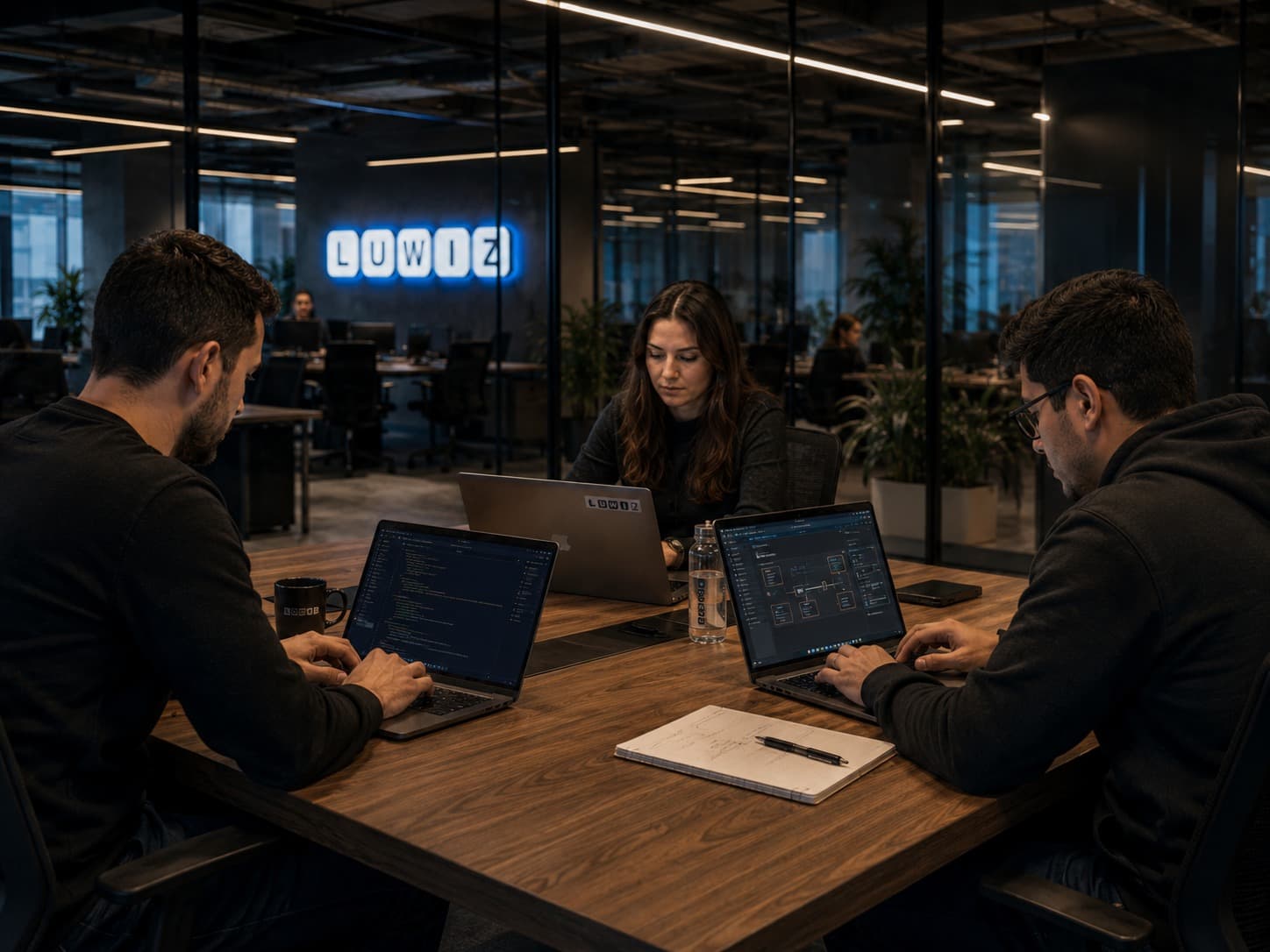
Diagnosis
AI & SEO visibility audit, mapping of target queries across Google, ChatGPT, Perplexity, Gemini and Claude.
Foundation
Technical structure and citable content: JSON-LD schema, llms.txt, ~150 word passages, siloed architecture.
Authority
E-E-A-T signals, external mentions and citations, internal linking that consolidates your topical authority.
Steering
AI share of voice measurement, monthly reporting and continuous optimization of your citations.
Frequently asked questions
When a diner asks 'best Italian restaurant in Toulouse' or 'where to have a romantic dinner tonight,' generative AI and Google's AI Overviews answer by naming venues. To be one of them, you need structured content (a machine-readable menu, clearly described signature dishes, recent reviews, a spotless Google Business Profile) and data marked up in Restaurant schema. Most restaurants have optimized none of this for these answers: that's exactly the ground where we make you citable, on Google and in AI at the same time.
Yes. We deploy an agent (website widget + WhatsApp, voice option) that answers 24/7, checks availability, takes the booking and pushes it into your tool. It knows how to qualify a group or private-hire request (number of covers, date, budget, allergies) and route to you when a human must decide. It doesn't replace your front-of-house team: it captures the requests that come in at night, on your closing day, or during the rush — the moments when the phone rings into the void.
No-shows are beaten with a simple, non-intrusive mechanism: instant booking confirmation, an automatic reminder the day before and a few hours prior (WhatsApp or SMS), and one-click rescheduling if the diner can no longer come. It's automation, not harassment. Tuned right, it clearly cuts empty tables without hurting the experience — diners actually appreciate the reminder.
We automate the post-meal review request. A few hours after service, the diner receives a personalized message with a direct link to your Google profile. A gentle follow-up goes out if nothing is left by day 3. The result: a steady flow of recent reviews — the signal Google AND AI look at first when deciding to recommend you. On anything sensitive, human validation always stays possible.
Yes, and the topic is even richer in hospitality. A hotel stacks visibility queries ('boutique hotel with restaurant in Nice'), a need for an agent that handles both table bookings and room/event requests, and stay-specific automations (post-stay review request, restaurant upsell, group handling). We adapt the three pillars to your mix of rooms + dining + events.
Yes, from the inside. Cyril, co-founder of Luwiz, also founded Onrush.fr, a management software for restaurants. We built, sold and ran a product in this sector — we know the rhythm of service, the reality of margins, the weight of no-shows and the importance of reviews. We applied our own AI-visibility method to Onrush before offering it to restaurateurs. We don't discover your trade on arrival.

One method, three visibility levers
SEO, GEO and AEO don’t compete — they compound. Explore our services to cover Google and AI answer engines in a single move.

Free GEO audit — report in 48h
Your site’s AI visibility score. Gap analysis vs 3 direct competitors. 5 priority optimizations. Delivered as a PDF, no commitment.
Reply within 24h · No commitment · contact@luwiz.io